Gym vs Personal Training Studio: Breaking the “No Machines, No Gains” Myth
Introduction
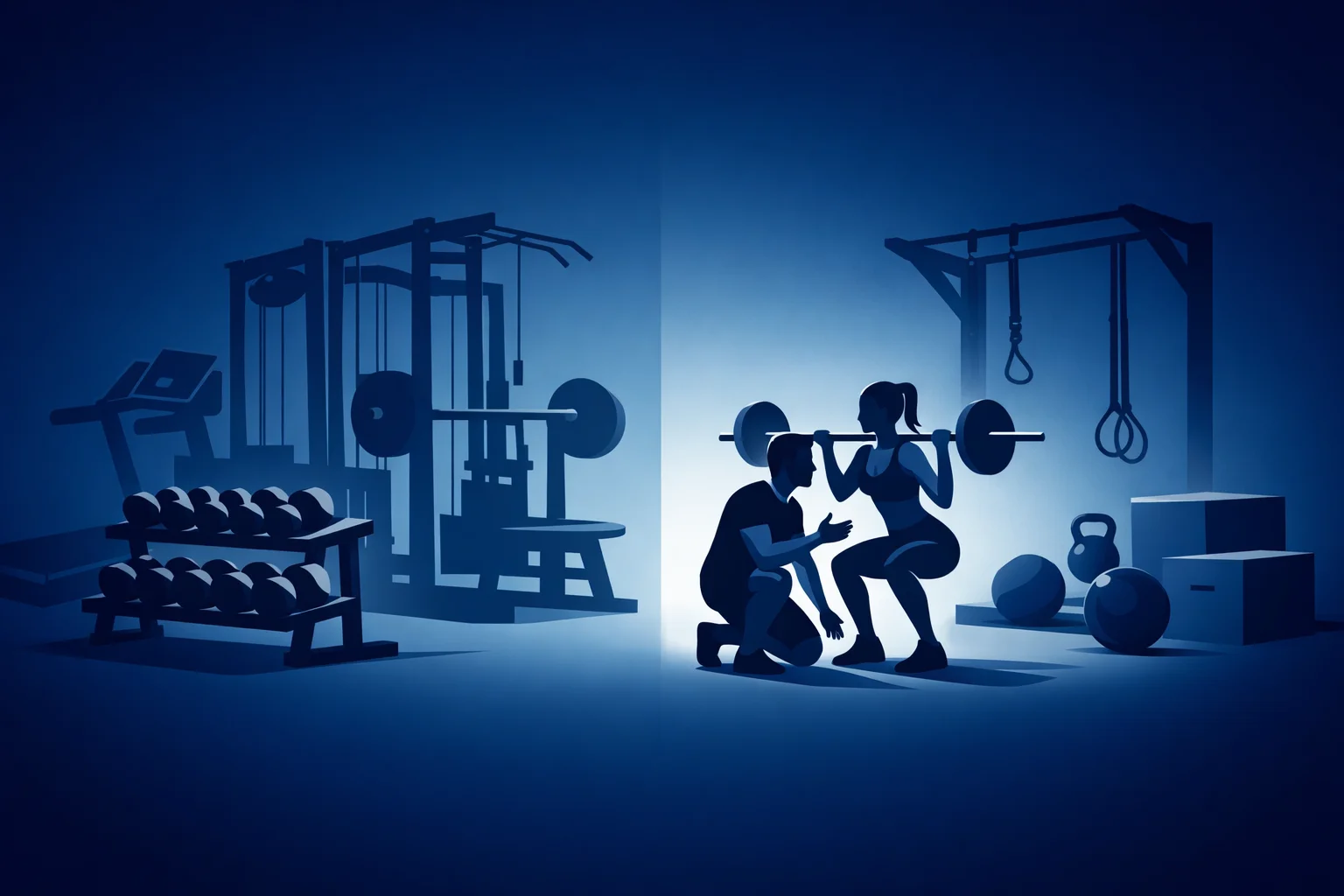
Many people assume that progress in fitness depends on having access to big machines, long rows of equipment, and a large commercial gym. This belief often leads to the common myth: “No machines, no gains.” In reality, results come from how you train, not where you train. Understanding the difference between a traditional gym and a personal training (PT) studio helps clarify why machines are optional, not essential.
What a Traditional Gym Is Designed For
A commercial gym is built to serve many people at once. Its main characteristics include:
- A wide variety of machines targeting individual muscle groups
- Free weights, cardio equipment, and large open spaces
- Minimal supervision unless you hire a trainer
Machines can be useful, especially for beginners who want guidance through fixed movement paths. However, gyms often rely on self-directed training. Without proper coaching, many people repeat the same routines, use poor technique, or choose exercises that don’t match their goals.
The gym environment offers options, but options alone don’t guarantee progress.
What a Personal Training Studio Focuses On
A PT studio is built around coaching, not equipment quantity. The focus is on:
- Movement quality and technique
- Strength built through free weights, bodyweight, and simple tools
- Individual programming based on goals, lifestyle, and limitations
Instead of isolating muscles on machines, training often emphasizes compound movements such as squats, hinges, pushes, pulls, and carries. These patterns reflect how the body actually moves in daily life and sport. The result is strength that transfers beyond the workout.
Less equipment doesn’t mean less stimulus, it means more intention.
The Myth of “No Machines, No Gains”
Muscle growth and strength are driven by three main factors:
- Mechanical tension
- Progressive overload
- Consistency over time
None of these require machines. A barbell, dumbbells, resistance bands, or bodyweight can all create sufficient load when used correctly. In fact, free-weight and functional training often demand more muscle coordination, stability, and control than machines.
Machines can assist training, but they don’t replace good programming, proper loading, and coaching. Gains come from how stress is applied and progressed, not from the machine itself.
Which Environment Fits Your Goals Best?
A gym may suit you if you:
- Enjoy training independently
- Like variety and access to many tools
- Already understand how to program and progress exercises
A personal training studio may be better if you:
- Want efficient, structured sessions
- Need accountability and coaching
- Prefer results over equipment variety
For busy professionals especially, shorter, focused sessions in a PT studio often lead to better long-term consistency and outcomes.
Practical Conclusion
The idea that machines are required for progress is outdated. Strength, muscle, and performance are built through smart training principles, not through the number of machines in a room. Whether you train in a gym or a personal training studio, results depend on quality coaching, appropriate loading, and consistency.
“No machines” does not mean “no gains.” In many cases, it means better ones.