Free Weights and Machines: Understanding Movement, Control, and Safety in the Gym
Introduction
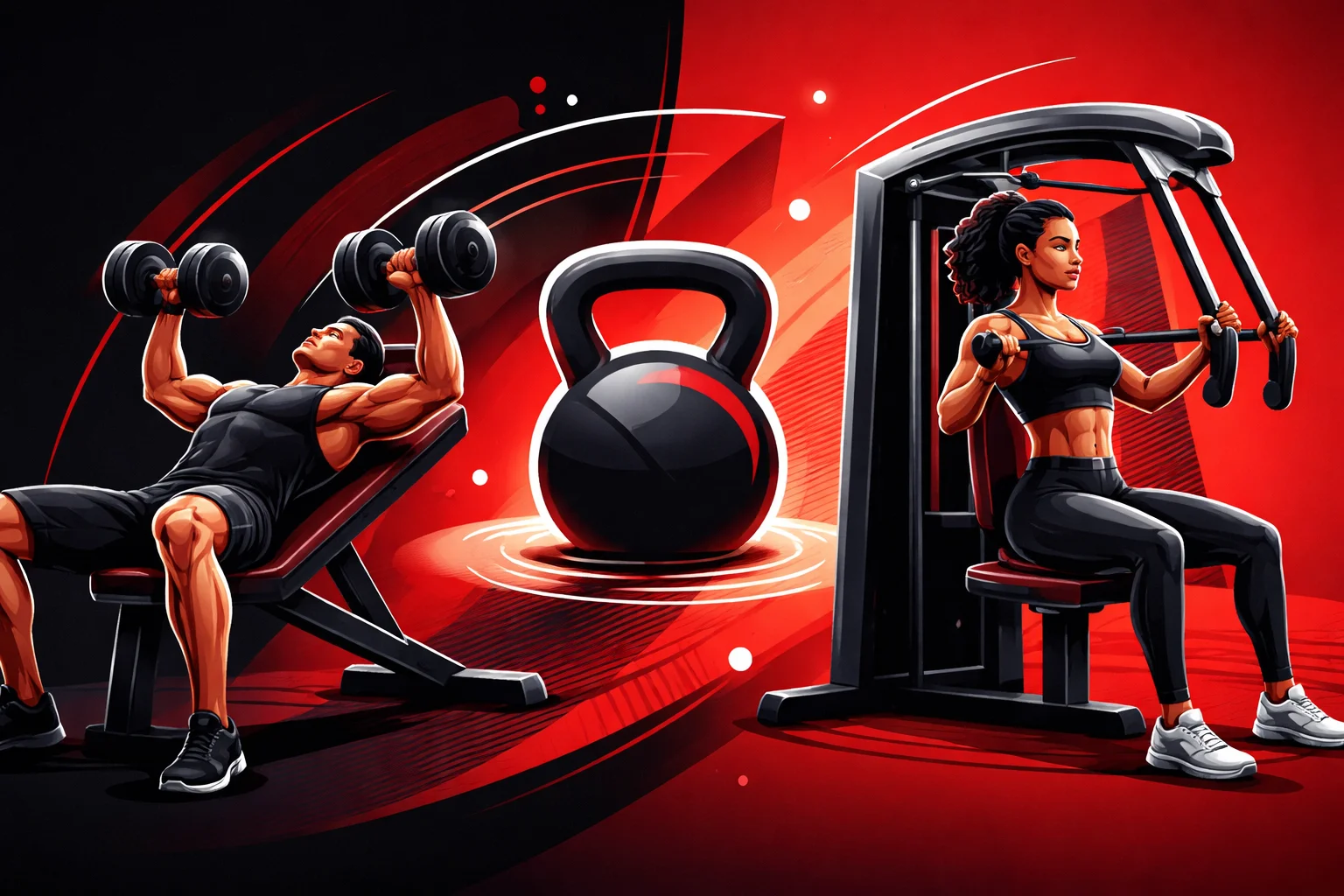
Walk into any gym and you will hear strong opinions about free weights versus machines. Some lifters swear by barbells and dumbbells, while others feel safer and more confident using machines. From a personal trainer’s perspective, this is not an either-or argument. The real difference lies in range of motion, control, and safety, and understanding these factors helps you train smarter, not harder.
How Free Weights Train Natural Human Movement
Free weights move through space without guiding rails or fixed paths. This allows your joints to move in ways that closely resemble real-life actions such as lifting, pushing, pulling, and carrying.
Because nothing stabilizes the weight for you, your body must do the work. This means:
- More muscles are involved, especially stabilizers
- Better coordination between joints
- Improved body awareness and control
For example, a dumbbell press allows each shoulder to move according to its own structure, rather than forcing both arms into the same path. Over time, this builds strength that transfers better to daily activities and sports.
Why Machines Limit Range of Motion on Purpose
Most gym machines are designed with a fixed range of motion, and this is not a flaw. Commercial gyms serve a wide population with different skill levels, mobility limitations, and training backgrounds. Machines reduce complexity by guiding the movement path, limiting excessive joint angles, and reducing the need for balance and coordination.
This makes them safer for beginners and for busy gym environments. A leg extension or chest press machine, for example, reduces technique errors that could occur with free weights. At the same time, this safety comes with a trade-off: the movement may not fully match how your body naturally wants to move.
Stability, Skill, and Long-Term Progress
Free weight exercises demand more than muscle strength. They require balance, timing, and joint stability. These qualities are essential for long-term progress and injury resilience.
When someone relies only on machines, they may become strong in controlled positions but struggle when stability is required. This is often noticed when transitioning from machines to free weights and feeling unexpectedly challenged despite lifting heavy loads before.
When Machines Actually Make Sense
Machines are not useless, and good trainers use them strategically. They are particularly helpful when learning basic movement patterns with confidence, managing fatigue during high-volume sessions, isolating a muscle without stressing other joints, or returning to training after injury under proper guidance.
Machines can also support consistency for busy professionals who need efficient, predictable workouts without high technical demands.
Practical Conclusion
Free weights build movement quality, coordination, and real-world strength. Machines limit range of motion mainly for safety and accessibility in gym settings. The smartest approach is not choosing sides, but understanding why each tool exists.
Build your foundation with free weights to improve control and resilience. Use machines to support your training, manage fatigue, and stay consistent. When used correctly, both play a valuable role in a well-designed training program.