
Introduction
Many couples ask whether training together improves results or simply makes workouts more enjoyable. From a personal training perspective, couple training can be highly effective, but only when it is structured correctly.
In a studio setting, we often coach partners with different fitness levels, goals, and training histories. The key is not just working out together, but programming intelligently so both individuals progress safely and efficiently.
Accountability and Consistency
Consistency drives results in strength training. One of the biggest advantages of couple training is built-in accountability. When one partner feels unmotivated, the other often reinforces the habit of showing up.
However, accountability must not turn into pressure. Training should support long-term adherence, not create competition that leads to overtraining or poor recovery.
- Shared training schedule improves attendance.
- Mutual encouragement increases effort quality.
- Emotional support reduces dropout rates.
Programming for Different Strength Levels
Rarely do couples have identical strength levels. Effective couple training does not mean lifting the same weights or performing identical progressions.
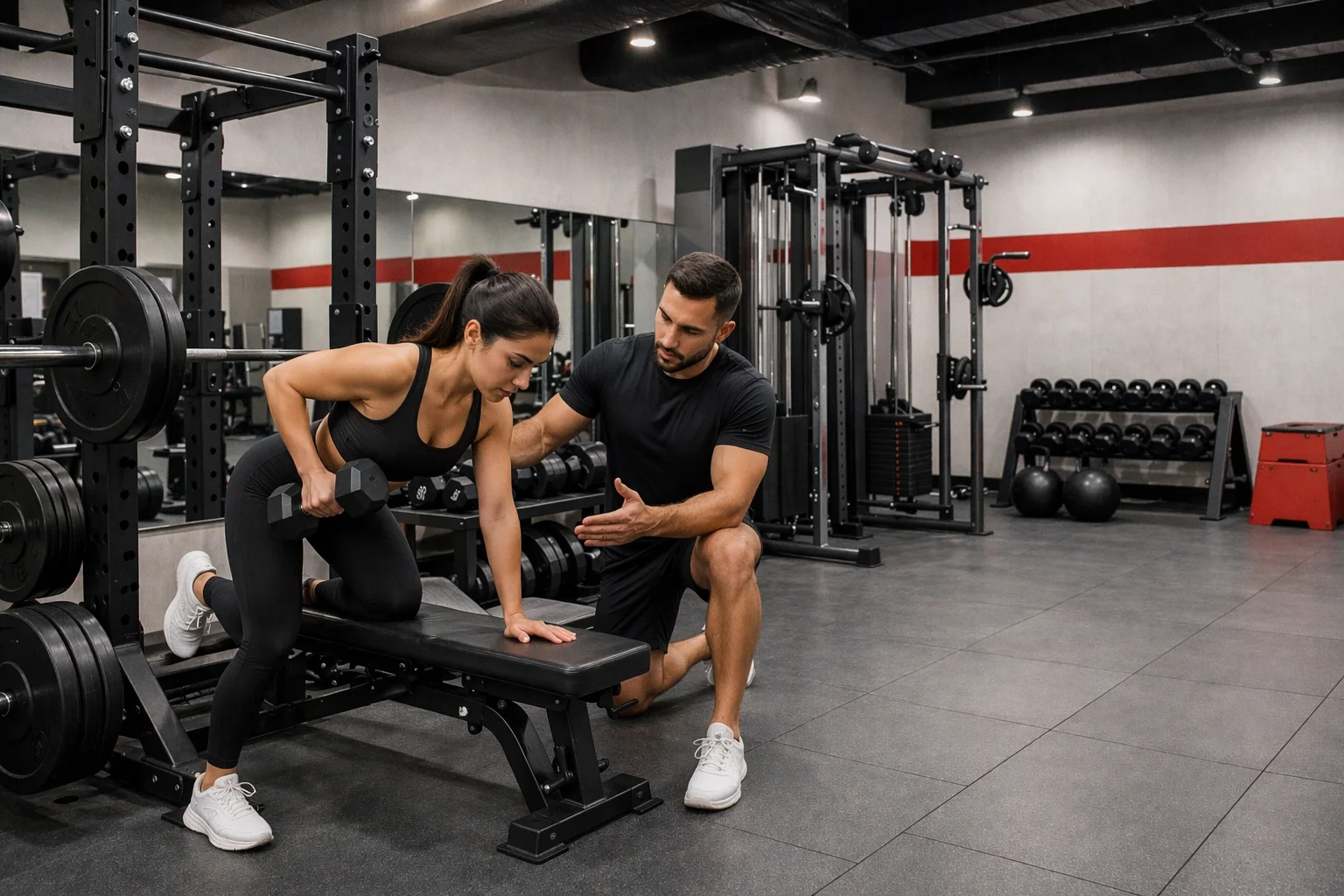
Instead, we structure sessions around the same movement patterns while adjusting load, tempo, and volume individually.
- Both partners squat, but at appropriate loads.
- Both perform upper-body pushing, but with individualized resistance.
- Rest periods can alternate to keep sessions efficient.
This approach maintains unity without compromising results.
Motivation vs Competition
Healthy motivation can improve performance. Unhealthy competition can compromise technique.
In our studio experience, couples perform best when they focus on personal progress rather than comparison. Strength training is individual by nature. Progress is measured against your previous performance, not your partner’s.
Clear coaching cues and objective tracking prevent ego-driven lifting.
Time Efficiency for Busy Professionals
For busy professionals, couple training is often a logistical advantage. Instead of scheduling separate sessions, both partners train simultaneously under one structured plan.
This reduces time barriers and increases long-term adherence. When training fits life, it becomes sustainable.
When Couple Training May Not Be Ideal
Couple training is not always optimal. It may be less effective if:
- Goals are completely different (e.g., rehabilitation vs performance).
- One partner requires intensive corrective work.
- There is constant comparison or discouragement.
In these cases, partial separation within the same session, or different programming blocks, may be necessary.
Practical Conclusion
Couple training can be very effective when structured properly. The benefits include improved consistency, shared accountability, and better time management.
But success depends on intelligent programming, individualized loading, and a focus on personal progress.
Train together, but progress individually.